
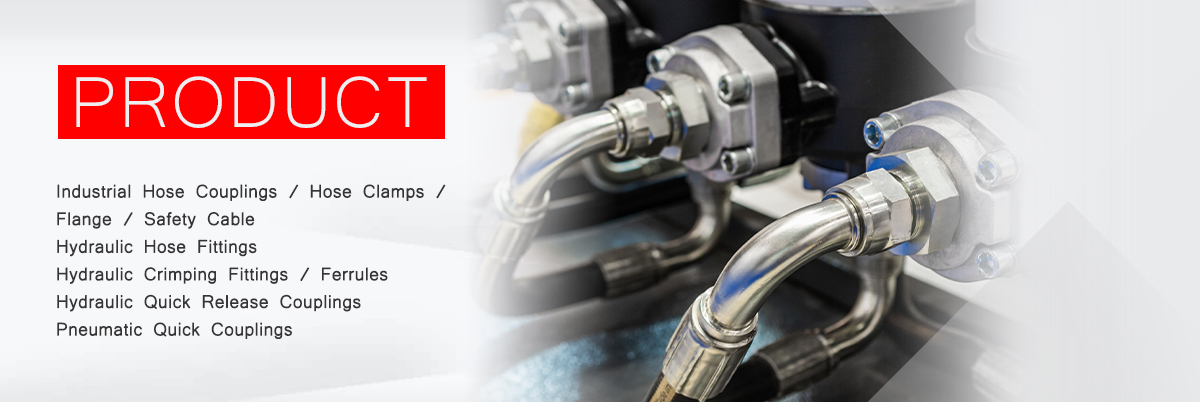
We manufacture hydraulic and pneumatic quick couplings for equipment that requires fast, secure, and repeatable fluid or compressed-air connections. Our product range supports industrial machinery, hydraulic power systems, pneumatic tools, testing equipment, and other applications where connection reliability directly affects operating efficiency.
Male plugs and female couplers are manufactured according to applicable ISO dimensional requirements. Selected coupling series are designed to interchange with compatible products from leading brands, helping equipment manufacturers and maintenance teams source replacement components without unnecessarily redesigning existing systems.
Steel, stainless steel, and brass options are available to support different operating media, environmental conditions, and connection requirements. We also provide engineering support for customers requiring modified dimensions, materials, seals, surface treatments, or connection configurations.
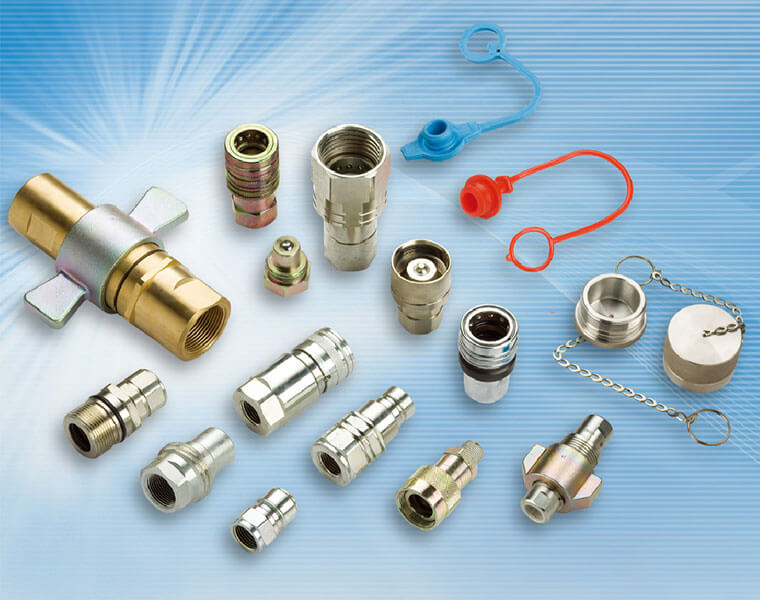
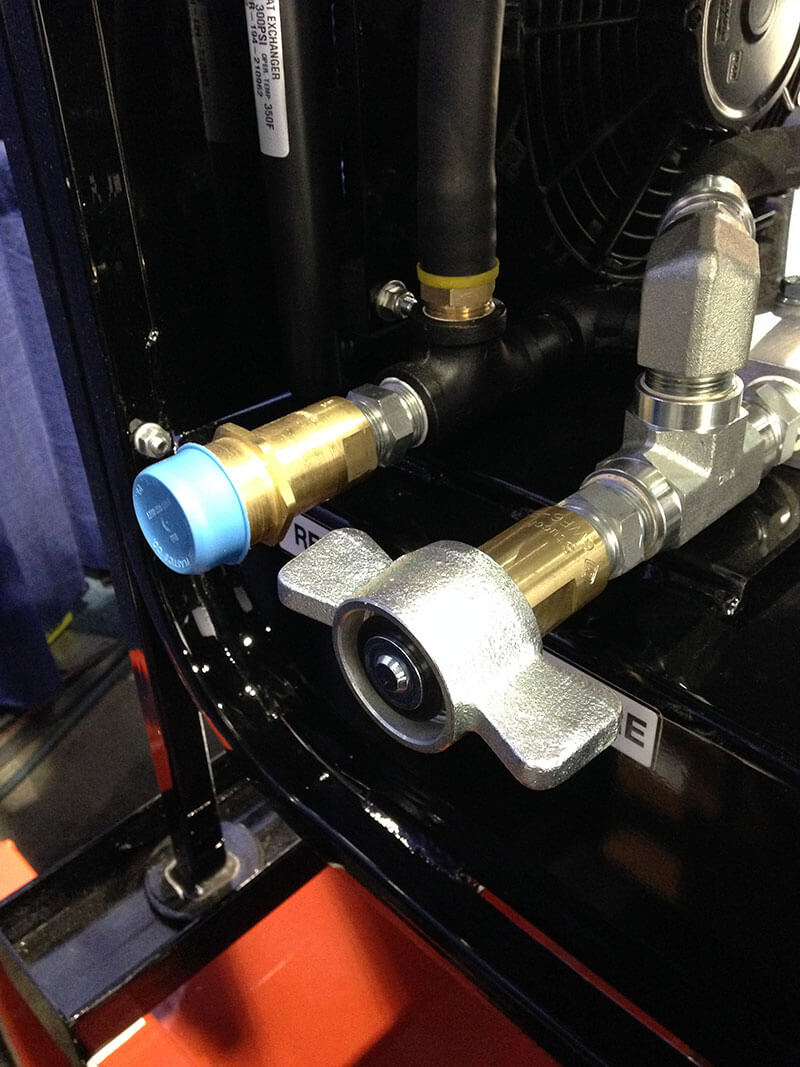
Quick Coupling Solutions for Hydraulic and Pneumatic Systems
Our product portfolio covers standard and customized connection solutions for transferring hydraulic fluids, compressed air, gases, and other compatible media.
Depending on the product series and application, available solutions may include:
- Hydraulic quick couplings
- Pneumatic quick couplings
- Male plugs and female couplers
- Valved and non-valved configurations
- Steel coupling bodies
- Stainless steel coupling bodies
- Brass coupling bodies
- Different thread and connection configurations
- Standard and customized surface treatments
In different markets, a quick coupling may also be described as a disconnect coupling or release coupling. Regardless of terminology, the essential function is to reduce the time and effort required to connect or isolate a fluid or pneumatic line.
Product selection should be based on the complete operating system rather than product appearance or connection size alone.
ISO-Compliant and Brand-Interchangeable Design
Industrial buyers frequently need replacement couplings that can connect with components already installed on machinery or production equipment.
Our male and female coupling profiles are manufactured according to applicable ISO standards and designed to support interchangeability with compatible coupling series from established brands. This allows customers to integrate replacement components into existing systems more efficiently.
Interchangeable designs can help:
- Reduce dependence on a single component source
- Simplify maintenance and replacement procurement
- Minimize unnecessary equipment modifications
- Consolidate purchasing across multiple machine platforms
- Maintain compatibility with existing plugs and couplers
- Reduce downtime caused by unavailable replacement parts
Quick Coupling Materials
The coupling body material affects mechanical performance, corrosion resistance, media compatibility, service environment, and total product life.
We manufacture hydraulic and pneumatic quick couplings in steel, stainless steel, and brass.
Steel Quick Couplings
Steel is commonly selected for hydraulic machinery and general industrial systems that require dependable mechanical strength.
Steel couplings can be supplied with different plated finishes according to the required corrosion resistance and operating environment. They are suitable for applications including agricultural machinery, industrial equipment, hydraulic power units, and hydraulic control systems.
Stainless Steel Quick Couplings
Stainless steel can be selected when the coupling is exposed to moisture, corrosive environments, demanding operating media, or applications requiring enhanced material durability.
The final stainless steel grade, seal material, and valve components should be evaluated according to the operating fluid, temperature, pressure, and environmental exposure.
Brass Quick Couplings
Brass quick couplings are frequently used in compressed-air and pneumatic applications.
They can be applied to air tools, compressors, gauges, and general industrial air systems, subject to the required pressure, flow, temperature, and media compatibility.
Connection Reliability Verified Through Vibration Testing
A quick coupling installed on mobile or continuously operating equipment may be exposed to vibration, repeated movement, pressure fluctuation, and frequent connection cycles.
These conditions can affect the locking components, internal valves, seals, and engagement between the male and female coupling halves.
Our quick couplings undergo rigorous vibration testing to verify that the assembled connection remains stable during operation. Testing is used to evaluate whether the coupling demonstrates:
- No abnormal loosening
- No structural damage
- No gas leakage
- No liquid leakage
- Stable male and female engagement
- Consistent locking performance
This testing is particularly relevant to agricultural machinery, industrial equipment, machine tools, hydraulic power units, and pneumatic systems where vibration-related failure could cause leakage, pressure loss, maintenance delays, or production interruption.
Corrosion-Resistant Surface Treatments
Hydraulic couplings may operate in environments exposed to humidity, water, industrial fluids, outdoor conditions, or repeated temperature changes.
An appropriate surface treatment helps protect the steel coupling body and maintain product integrity throughout its expected service period.
Our hydraulic quick couplings have been tested with the following corrosion-resistant finishes.
Trivalent Chromate Zinc-Plated Finish
The trivalent chromate zinc-plated finish passed a 240-hour salt spray test with no white corrosion, also known as white rust.
This treatment provides corrosion protection for general industrial and hydraulic applications where the coupling may be exposed to normal levels of moisture and environmental contamination.
Zinc-Nickel-Plated Finish
The zinc-nickel-plated finish passed a 720-hour salt spray test with no red corrosion, also known as red rust.
This finish is intended for customers requiring a higher level of corrosion resistance, including applications involving outdoor equipment, mobile machinery, humid operating environments, or longer service expectations.
Surface treatment should be selected according to environmental exposure, customer specifications, maintenance conditions, and expected product life.
How a Quick Coupling Works
A quick coupling normally consists of a male plug and a female coupler containing a mechanical locking system.
When the male plug is inserted into the female coupler, locking balls or pins engage with the plug profile and secure the connection. In a valved design, the internal valves open as the two coupling halves are connected, allowing fluid or gas to pass through the system.
To disconnect the line, the operator pulls back or operates the release sleeve on the female coupler. The locking mechanism disengages, allowing the male plug to be removed.
When the coupling halves are separated, the internal valves close automatically. This helps reduce fluid loss, limit leakage, and reduce the possibility of external contamination entering the system.
The exact connection sequence may vary according to the coupling series, valve structure, pressure condition, and locking design.
Industrial Applications
Our quick couplings are used in hydraulic, pneumatic, testing, measurement, and machinery connection systems.
Agricultural and Industrial Machinery
Agricultural and industrial equipment frequently requires hydraulic attachments, actuators, cylinders, or auxiliary lines to be connected and replaced.
Quick couplings allow operators and maintenance personnel to change components more efficiently while maintaining a secure fluid connection. Vibration resistance, corrosion protection, and reliable locking are especially important for machinery operating outdoors or under repeated movement.
Air Compressors
An air compressor quick coupling provides a removable connection between the compressed-air source, hose, tool, or downstream equipment.
The coupling should be selected according to system pressure, required airflow, acceptable pressure loss, connection frequency, hose size, and operating environment.
An undersized or incorrectly selected coupling may restrict airflow and reduce the performance of connected pneumatic equipment.
Pneumatic Tools
An air tool quick coupler allows operators to change pneumatic tools without using additional connection tools.
For production lines and maintenance operations where tools are replaced frequently, a suitable coupling can reduce setup time and support more efficient equipment use.
Flow capacity, locking method, material, connection profile, and operating pressure should be confirmed before selection.
Hydraulic Power Units and Control Systems
Hydraulic quick couplings provide accessible connection points between power units, hoses, cylinders, control valves, testing devices, and auxiliary equipment.
They can simplify system assembly, component replacement, maintenance inspection, and temporary testing connections.
For hydraulic applications, users should evaluate maximum working pressure, pressure surges, flow rate, fluid type, temperature, seal material, and allowable leakage.
Machinery and Machine Tools
Quick couplings can be used for hydraulic clamping systems, pneumatic circuits, cooling lines, lubrication connections, maintenance points, and auxiliary equipment within machinery and machine tools.
A properly selected coupling can reduce the time required to isolate, remove, or reconnect machine components during maintenance and production changeovers.
Leak-Testing Equipment
Leak-testing systems require stable and repeatable connections to maintain test accuracy.
Couplings used in these systems should be evaluated for seal compatibility, internal leakage, external leakage, operating pressure, test media, and connection repeatability.
Pressure Gauges and Measuring Instruments
Quick couplings allow pressure gauges and measuring instruments to be installed, removed, or transferred between different testing points.
This arrangement can reduce the need for permanent gauges at every measurement position and improve maintenance flexibility.
Die and Mold Change Systems
Quick couplings can be applied to cooling water, compressed air, or hydraulic circuits used during die and mold changes.
By simplifying line connection and disconnection, they can help reduce changeover time and make recurring mold replacement procedures more efficient.
Custom Quick Coupling Development
Standard products may not meet every machine design, fluid medium, installation space, or replacement requirement.
We support custom quick coupling development for customers requiring modified dimensions, connection profiles, materials, valve structures, seals, springs, threads, or surface treatments.
As an experienced hydraulic quick coupler manufacturer, we can evaluate custom requirements based on drawings, existing samples, target applications, or technical specifications.
Custom options may include:
- Modified coupling dimensions
- Customer-specific connection profiles
- Special thread specifications
- Alternative body materials
- Different seal compounds
- Customized spring characteristics
- Modified internal valve designs
- Specified surface treatments
- Brand-interchangeable configurations
- Application-specific packaging or identification
Each modification should be evaluated according to operating pressure, temperature, flow, media properties, connection frequency, installation conditions, and expected product life.
Information Required for Custom Development
To evaluate a custom quick coupling project, customers should provide as much of the following information as possible:
- Product drawing or reference sample
- Male and female connection dimensions
- Required thread or hose connection
- Maximum and normal operating pressure
- Operating temperature range
- Fluid or gas type
- Required flow rate
- Body material
- Seal material requirement
- Surface treatment requirement
- Connection frequency
- Application and equipment type
- Estimated order quantity
- Required inspection or documentation
Complete technical information helps reduce development uncertainty and allows the manufacturer to evaluate product feasibility more accurately.
Quality Management and Manufacturing Support
Selecting a hydraulic quick coupling supplier involves more than comparing product dimensions and quotations.
Industrial buyers also need to assess whether the supplier can maintain material consistency, dimensional control, connection reliability, production traceability, and documented quality procedures.
Our quality and manufacturing support includes the following capabilities.
ISO 9001 Quality Management
Our ISO 9001 quality management system supports documented production procedures, inspection management, process control, traceability, and continuous improvement.
Material Certificates
Material certificates can be provided according to product specifications and order requirements.
These documents help customers verify the material used for the coupling body or related components and support their internal quality documentation procedures.
Digital Transformation
Digital tools are integrated into appropriate production and management processes to improve information accuracy, process visibility, communication, and manufacturing coordination.
AI Technology Integration
AI technologies are progressively applied to suitable operational and management activities, including data analysis, workflow optimization, and information processing.
These systems support operational efficiency but do not replace the technical inspection and production controls required for industrial components.
How to Select the Right Quick Coupling
A coupling should be selected based on the full operating environment rather than one specification in isolation.
Before requesting a quotation or confirming a product, consider the following factors.
| Selection Factor | What to Confirm | Why It Matters |
Operating Media |
Confirm whether the system carries hydraulic oil, compressed air, water, gas, chemicals, or another medium. |
The operating media affects the selection of seals, springs, body materials, valves, and surface treatments. |
Working Pressure |
Identify both the normal operating pressure and the maximum pressure the coupling may experience. |
Pressure surges and impulse conditions should also be considered, particularly in hydraulic machinery and mobile equipment. |
Temperature Range |
Confirm the lowest and highest operating temperatures. |
Temperature can affect seal performance, spring characteristics, fluid viscosity, and material selection. |
Required Flow Rate |
The coupling should provide sufficient flow for the connected equipment without creating excessive restriction or pressure loss. |
Nominal connection size alone may not fully represent actual flow performance. |
Material and Surface Treatment |
Steel, stainless steel, and brass provide different combinations of strength, corrosion resistance, and application suitability. |
For plated steel products, the required salt spray performance and environmental exposure should also be evaluated. |
Interchangeability |
When replacing an existing coupling, verify the complete connection profile rather than relying only on the brand name or nominal size. |
Not every coupling with a similar appearance is mechanically or functionally interchangeable. |
Connection Frequency and Operating Environment |
Frequently connected systems may require different locking, sealing, and wear considerations than permanent or rarely disconnected installations. |
Vibration, dust, moisture, outdoor exposure, and operator handling should also be included in the selection process. |
Frequently Asked Questions
What Is the Design Principle of a Quick Coupling?
When the male plug is inserted into the female coupler, internal locking balls or pins engage with the plug profile and secure the connection.
In a valved coupling, the internal valves open as the coupling halves are connected, allowing fluid or gas to flow through the system.
When the release sleeve is operated, the locking mechanism disengages and the male plug can be removed. The valves then close automatically to help minimize leakage, fluid loss, and contamination.
Why Are Quick Couplings Used?
Quick couplings allow hydraulic, pneumatic, fluid, or gas lines to be connected and disconnected without conventional tools or lengthy disassembly procedures.
They can reduce maintenance time, simplify equipment changes, improve production efficiency, and provide more flexible access to machine components.
Their value is particularly significant in systems where tools, molds, gauges, hoses, or attachments must be changed repeatedly.
What Causes Check Valve Failure in a Quick Coupling?
A check valve may fail when internal seals, O-rings, springs, or valve components are incompatible with the operating media or temperature.
Acidic, alkaline, corrosive, or chemically aggressive media may deform or degrade unsuitable seal and spring materials. This can cause blockage, unstable valve movement, or leakage.
In some pneumatic configurations, an operating pressure below approximately 3 psi may also be insufficient to overcome the selected spring force, affecting valve opening or sealing performance.
To reduce the risk of failure:
- Confirm the chemical properties of the fluid or gas
- Select compatible seal and spring materials
- Verify the operating temperature range
- Evaluate normal and minimum system pressure
- Match spring force to the required valve operation
- Confirm flow and sealing performance before installation
Both operating pressure and spring characteristics should be considered when designing or selecting the check valve system.
What Is the General Production Lead Time?
Our standard production lead time is approximately 45 days to two months under normal production conditions.
Actual lead time may vary depending on product specifications, materials, surface treatments, order quantity, customization requirements, inspection documentation, and the current production schedule.
Custom-developed products may require additional time for technical review, tooling, sampling, testing, and approval.
Is There a Minimum Order Quantity?
Order requirements depend on the product series, specification, customization level, and manufacturing conditions.
Under FOB terms, shipments with a total value below USD 6,000 will incur additional domestic charges. These may include documentation fees, bank handling fees, and local logistics expenses.
Customers may consolidate multiple compatible products into one shipment to improve purchasing and logistics efficiency.
Request a Quick Coupling Quotation
To receive an accurate recommendation and quotation, provide the required coupling type, connection size, operating pressure, temperature, fluid or gas type, material, surface treatment, application, estimated quantity, and interchangeability requirements.
Drawings, photos, samples, or the model number of the currently installed coupling can help our team confirm the connection profile and technical requirements.
Our engineering and sales teams will review the information and recommend an appropriate standard or custom solution for your equipment.
Contact our hydraulic quick coupler supplier team to discuss your connection requirements.
